
Il-Victoria Lines u mudelli 3D ta' fortifikazzjonijiet fil-Mosta
Mudell minn Stephen Spiteri tal-Fortizza tal-Mosta minn dan il-Youtube video.
Mudell minn Stephen Spiteri tal-Batterija tat-Targa minn dan il-Youtube video
Video minn din il-Facebook post tas-17 ta' Frar 2021 tal-pagna Malta Audio Visual Memories fejn tidher il-Fortizza tal-Mosta.
Video minn din il-Facebook post tal-24 ta' Novembru 2021 tal-pagna Malta Audio Visual Memories juri Tahrig ta' salvatagg mill-Forzi Armati Ingliżi gewwa t-‘Tarġa Battery’ fil-Mosta.
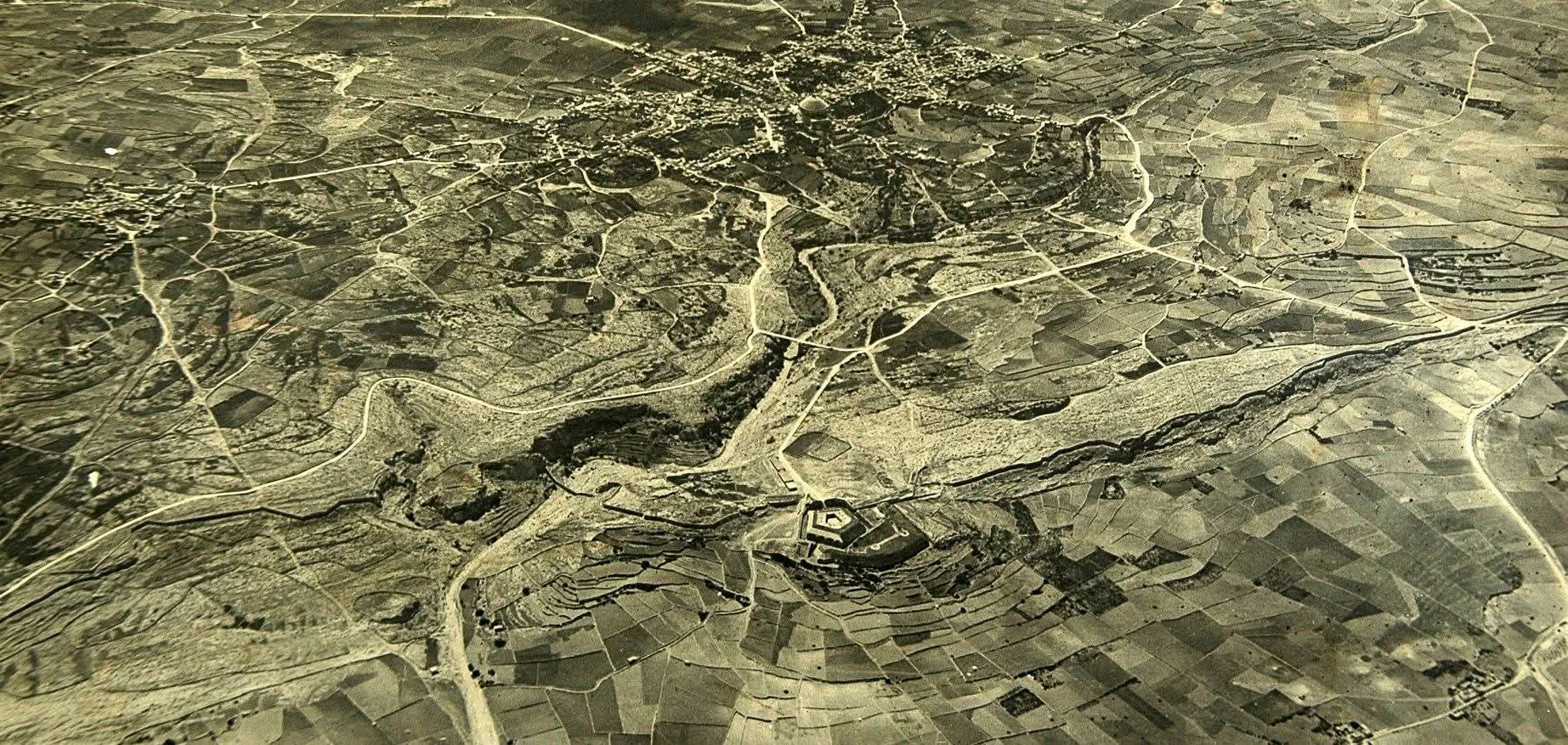 Old photo of Fort Mosta and environs.
 Photo reproduced with the VL highlighted in red.
Minn din il-Facebook post tal-4 ta' Dicembru 2018 tal-pagna Friends of the Victoria Lines Trail:
Fort Mosta and environs. A remarkable aerial photo from almost a 100 years ago. The photo was taken before Constitution Street was opened in 1929. This is the road which links the Mosta Dome to Targa Gap in a straight line and which includes a viaduct over Wied il-Ghasel.
From right to left, one can identify: Targa Gap; the Victoria Lines in what is now Gnien l-Gharusa tal-Mosta; Fort Mosta; the Victoria Lines descending into Wied il-Ghasel and crossing this deep valley; the Victoria Lines crossing Wied Filip which is no more having been eaten away by the quarry and the Victoria lines continuing in the direction of T’Alla u Ommu, along what is now Triq il-Fortizza tal-Mosta. Photo courtesy of John Joseph Borg
Intriguing structure just behind the Victoria Lines, near Fort Mosta.Minn din il-Facebook post tat-22 ta' Mejju 2020 tal-pagna Friends of the Victoria Lines Trail:
RECAP - Intriguing structure just behind the Victoria Lines, near Fort Mosta:
(i) The structure does not appear in the 1901 record Plan of the Victoria Lines; but then no one has suggested that it could be from that period.
(ii) The structure appears in the Malta Survey sheets of 1968.
(iii) The structure must therefore be either WW II or early post war.
(iv) The slanting (in appearance concrete) wall on one side of the structure would seem to be some form of anti-blast wall (with a small window-like opening in it).
(v) Given that Fort Mosta has long been used for the storage of ammunition: it is plausible that the building was intended to serve as "a controlled explosion structure with a blast concrete wall, to protect the bomb disposal team when they need to make a controlled explosion".
(vi) Furthermore, Fort Mosta has also long been used for the storage of materials used in the production of explosives and the facility might have been intended for carrying out tests on these.
(vii) It is possible that the screen / blast wall predates the building behind it.
(viii) It cannot be excluded that "the window (in the concrete wall which serves as a shield) could either be a machinegun loop-hole or an observation port or even some fire control position".
(ix) The structure is now derelict and does not appear to be in use.
The photo shows the structure as it appears from outside of the Victoria Lines infantry wall. Photo Simone Vella Lenicker
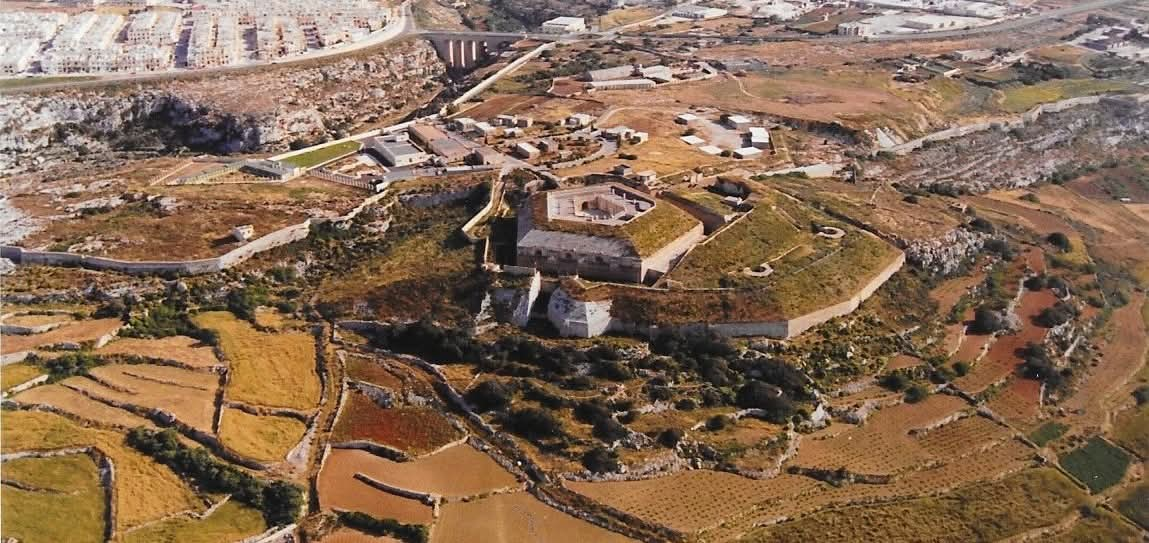 Aerial photo of Fort Mosta from 1996.
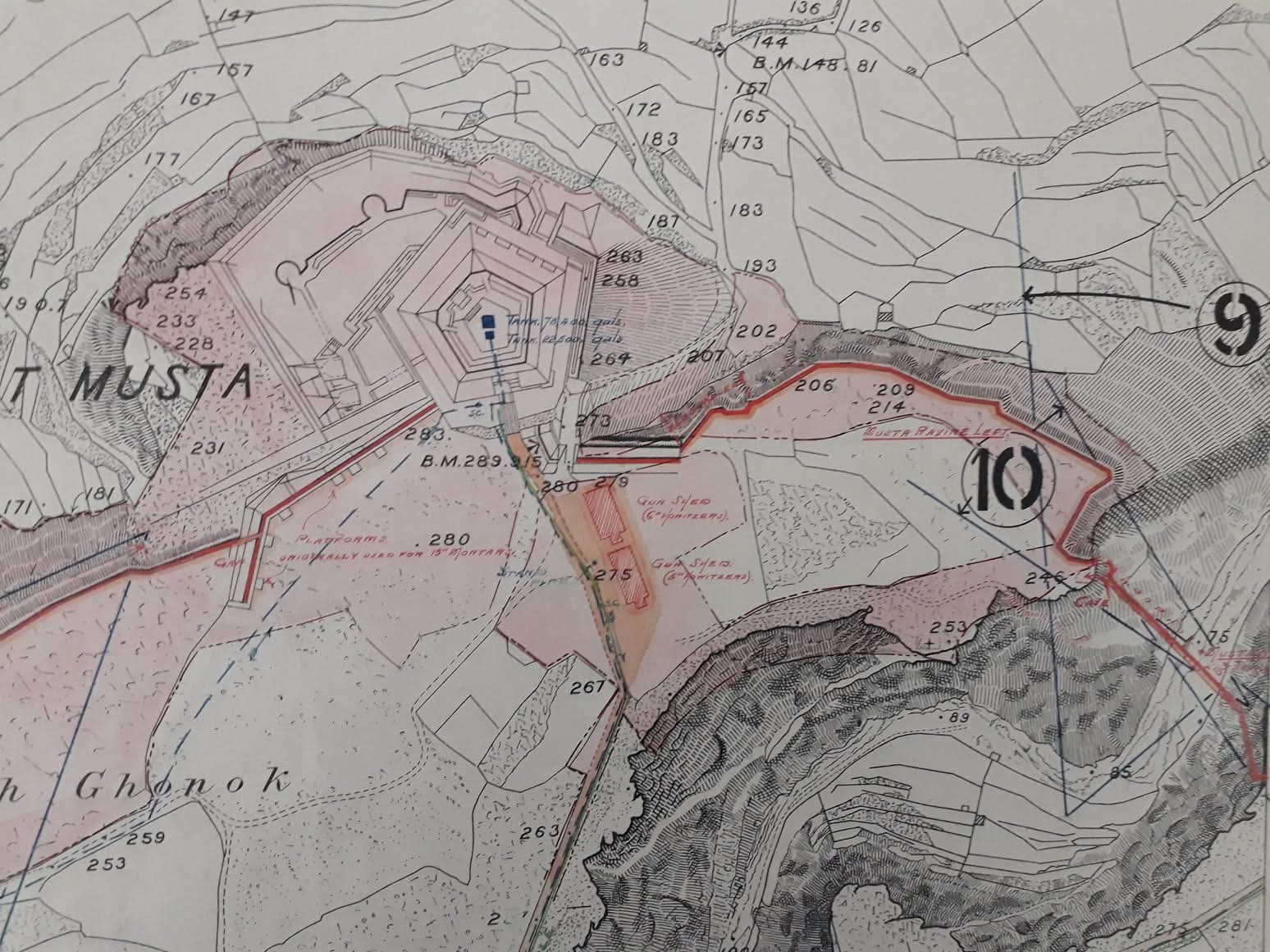 Map showing Fort Mosta, with the Victoria Lines infantry wall extending from it on both sides (including the stretch that used to cross Wied il-Ghasel over a masonry bridge). From the Victoria Lines Record Plan, compiled in 1901 and now held at the UK National Archives (reference WO 78/5301).
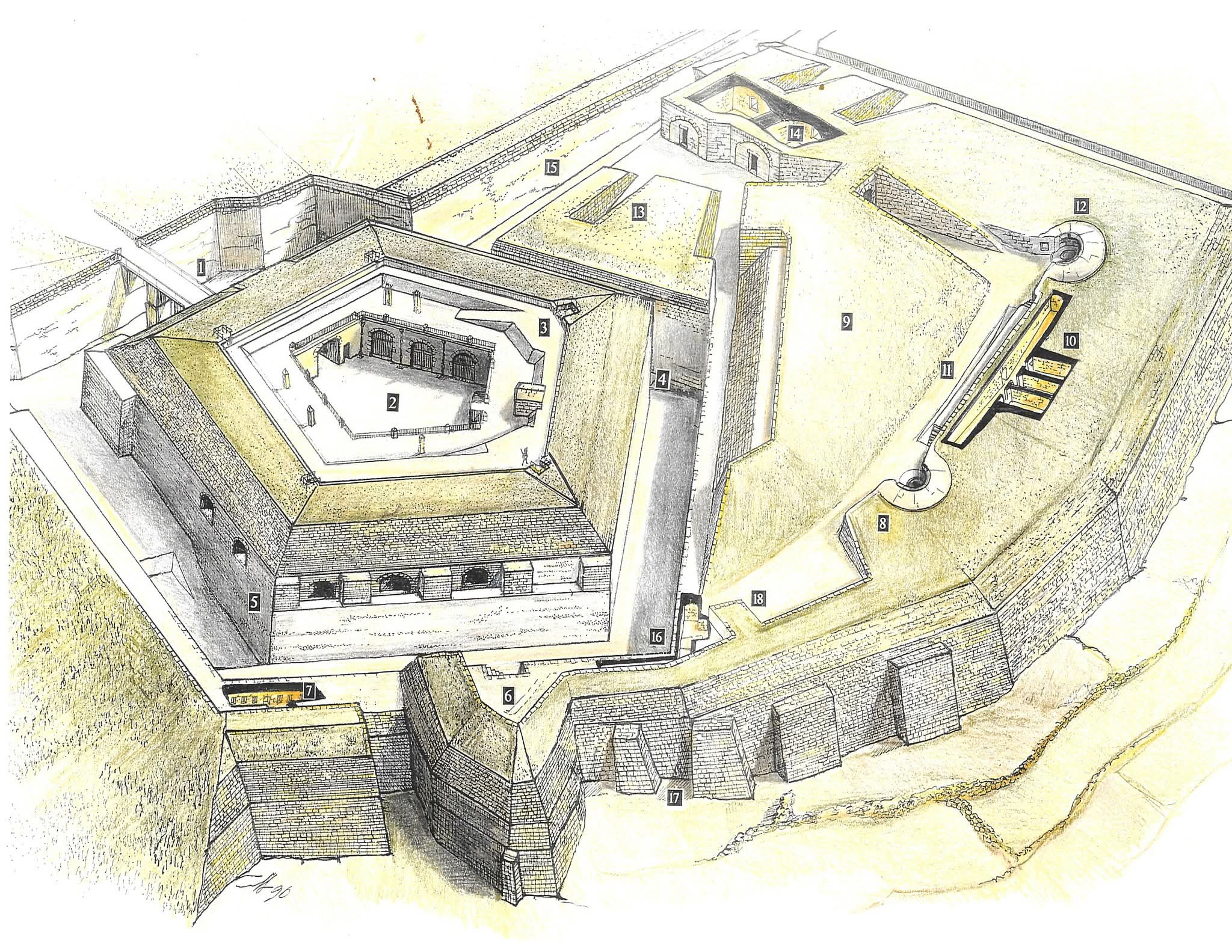 Drawing of Fort Mosta by Dr. Stephen C Spiteri from his book The Fortifications of Malta (BDL Publishing - 2017): 1 - main gate into the casemated keep / 2-courtyard of the keep / 3-platform for field gun/4-ditch / 5-vaulted, serrated embrasures in the keep / 6 - covered way on outer battery /7-counterscarp gallery (x3) /8 earthen parados (mount) / 9 - emplacement for 6-inch BL gun on HP disappearing mount (x2)/10-shell and cartridge stores for BL guns/11-two casemates for 64-pdrvguns on traversing carriages, covering the escarpment in the direction of Targa Gap / 12-masonry buttresses (in view of the underlying layer of clay).
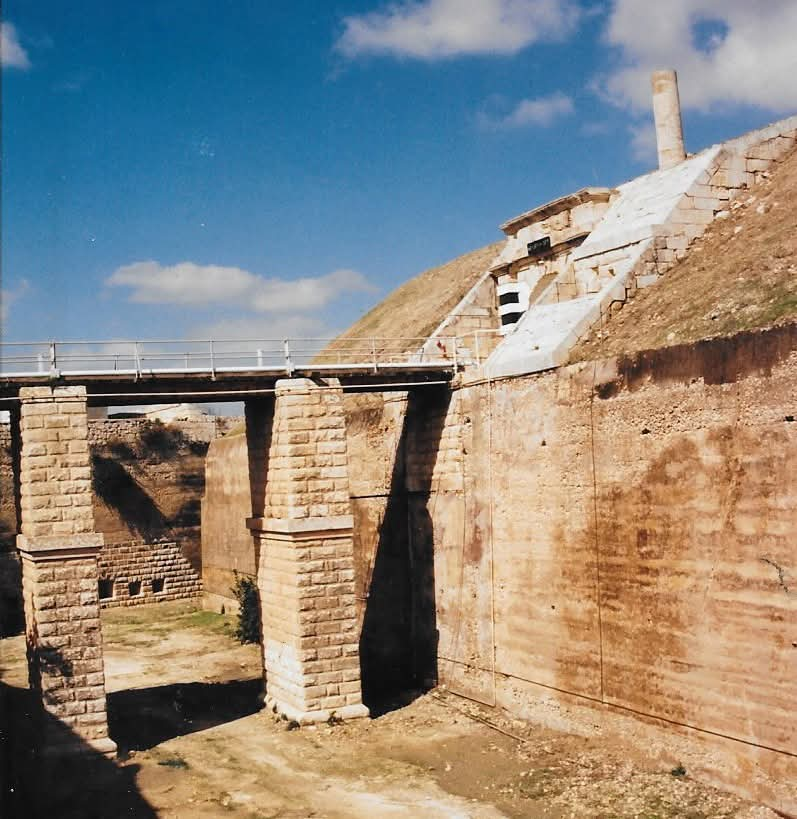 The main entrance into the keep of Fort Mosta, across a bridge over the ditch which was defended by counterscarp galleries, one of which is visible in this photo from 1996.
Minn din il-Facebook post tal-5 ta' Dicembru 2025 tal-pagna Friends of the Victoria Lines Trail:
Fort Mosta (post 1/2)
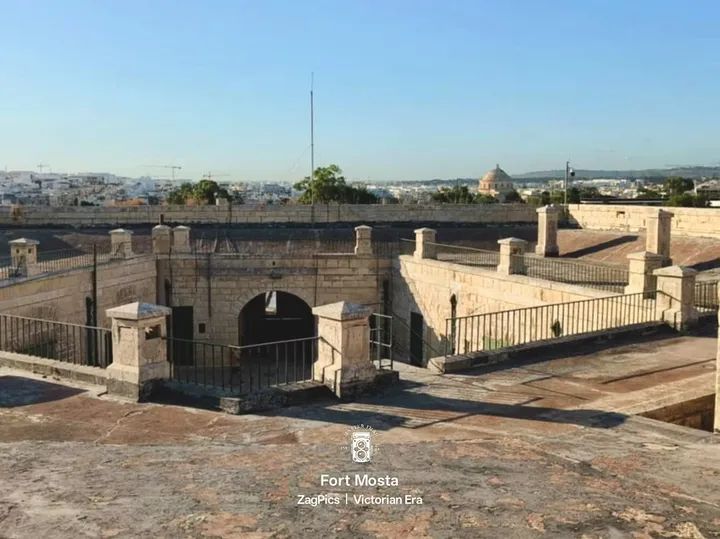
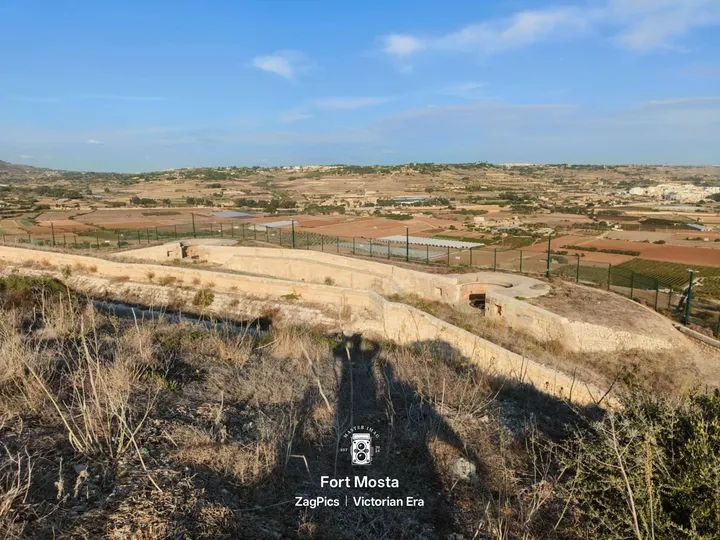
Fort Mosta (built 1878 - 1880) occupies the central position along the escarpment formed by the Great Fault. From its vantage point it dominates the countryside below it, including the road which from Burmarrad leads up to Targa Gap. It is made up of three main elements: (i) a keep at the back of the fort, (ii) two other separate casemates on one side (covering the stretch of the Victoria Lines in the direction of Targa Gap) and (iii) a gun battery in front (facing the expected direction of an enemy attack).
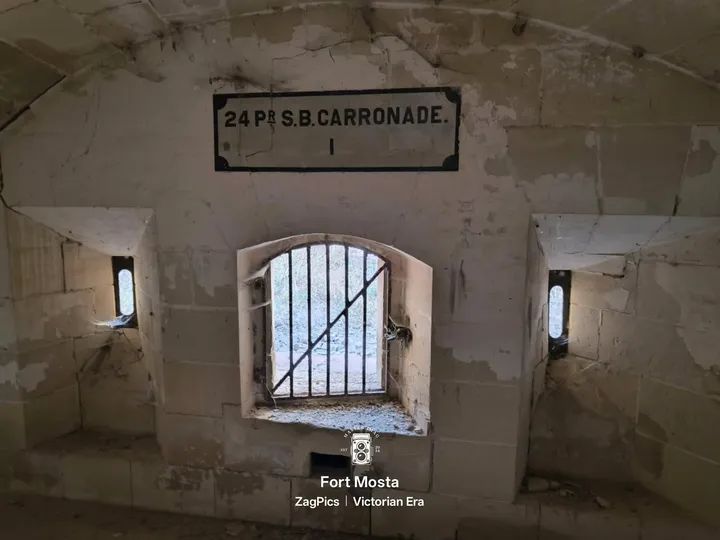
The keep (the word denotes a strong point within a fortification) is surrounded by a deep ditch which also separates it from the battery. The ditch was defended by enfilading fire from three counterscarp galleries. The keep is casemated (these being enclosed, vaulted emplacements for guns) Inside the casemates were seven x 64-pdr guns on traversing carriages set to fire from behind the embrasures, which have serrated cheeks. At roof-top level, platforms were provided for the deployment of field guns
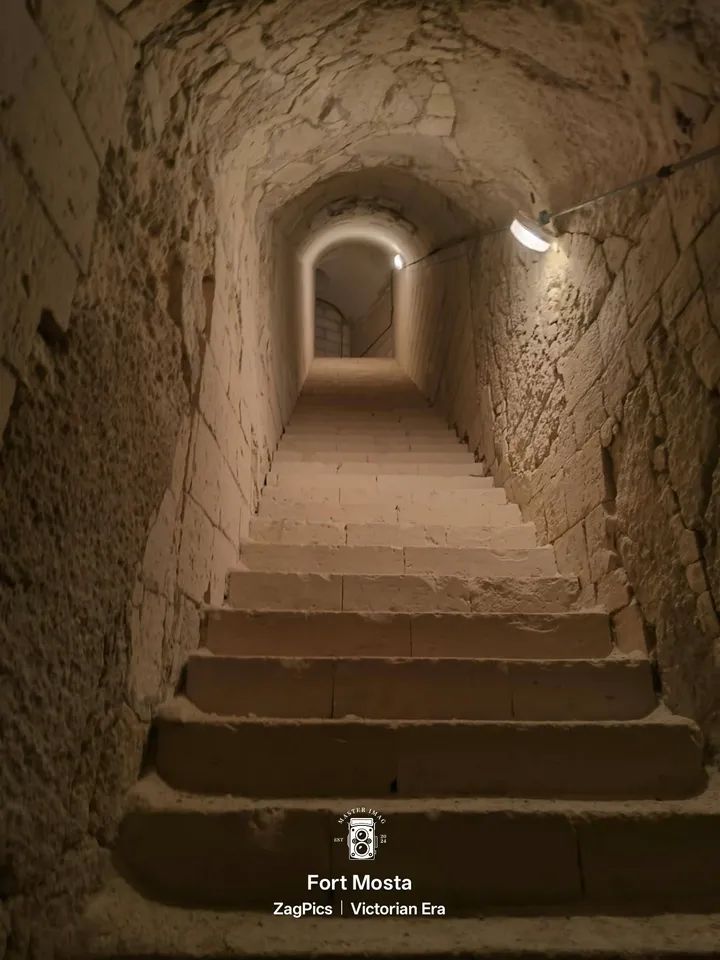
In the battery, there were two emplacements for 6-inch breech loading guns on hydraulically operated disappearing mounts (each with its underground magazine stores and gun-crew shelters).
After 1907 when the Victoria Lines lost their original strategic value, this was also the case of Fort Mosta and its original guns were removed and not replaced. Well before 1940 it had become exclusively a munitions depot, which role it still fulfills today (although the ammunition and explosives are not stored inside the fort itself but in the surrounding area).
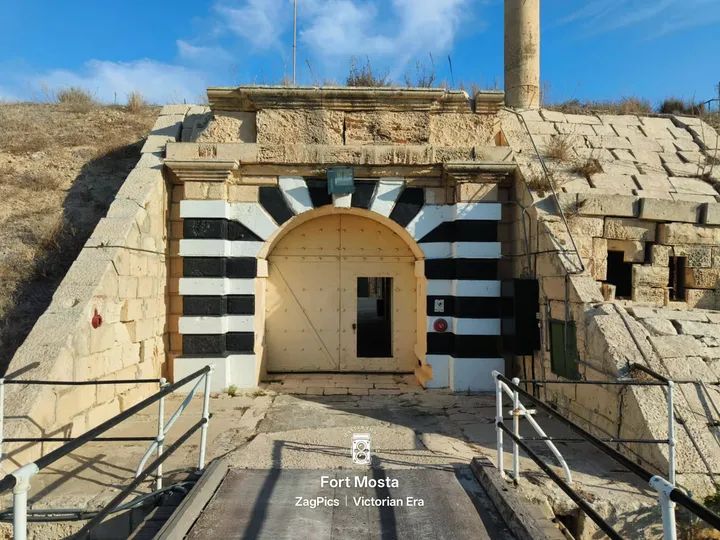
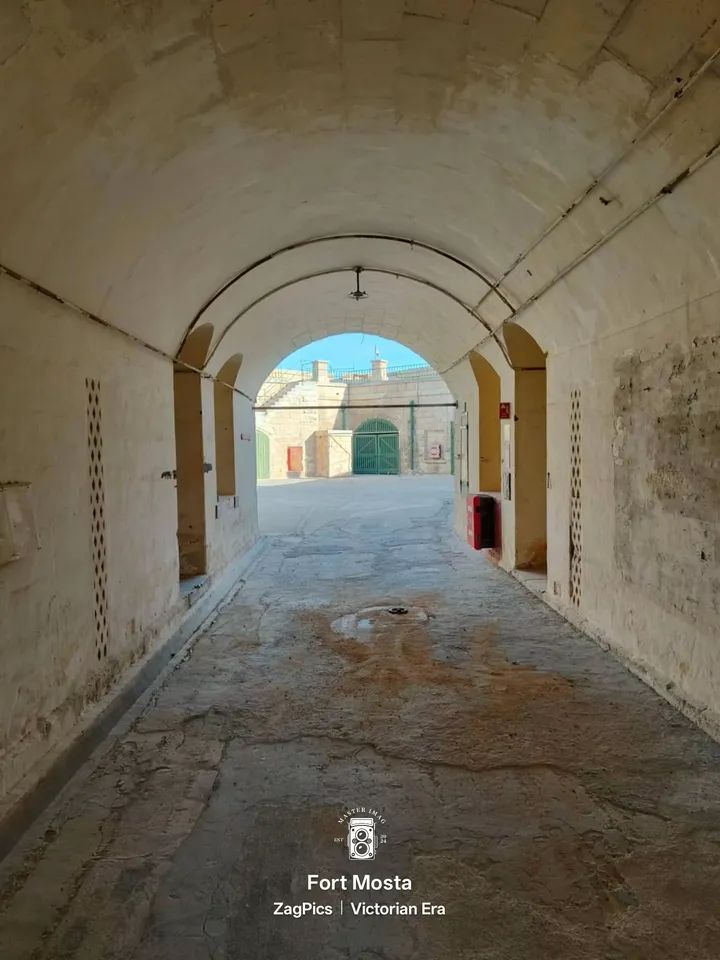
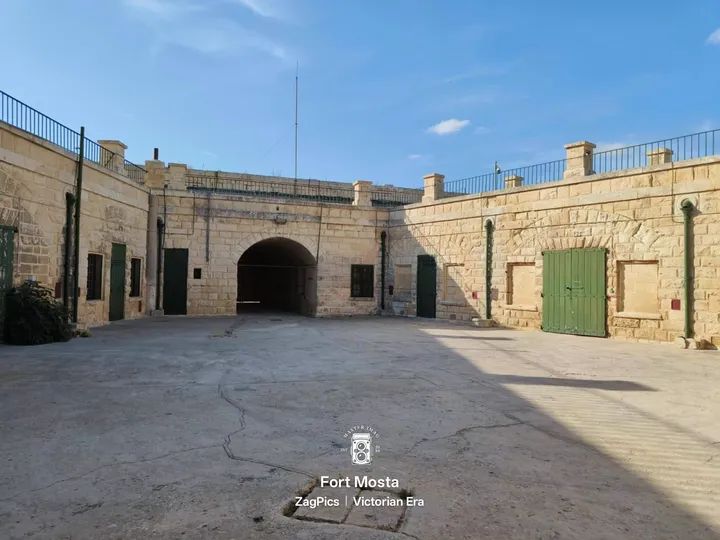
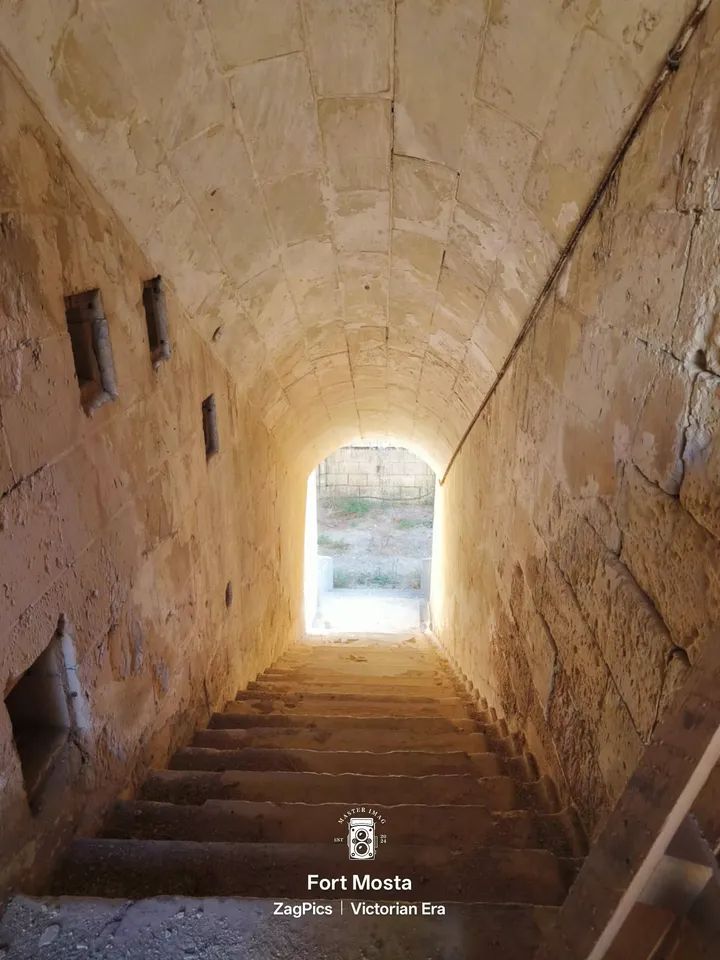
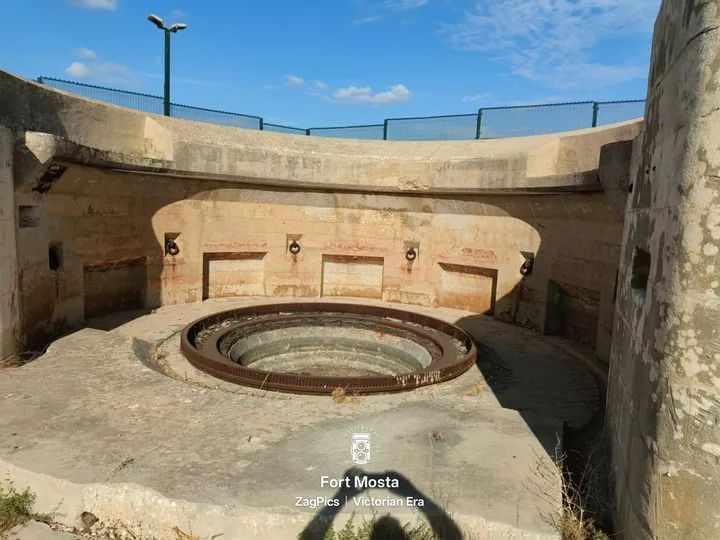
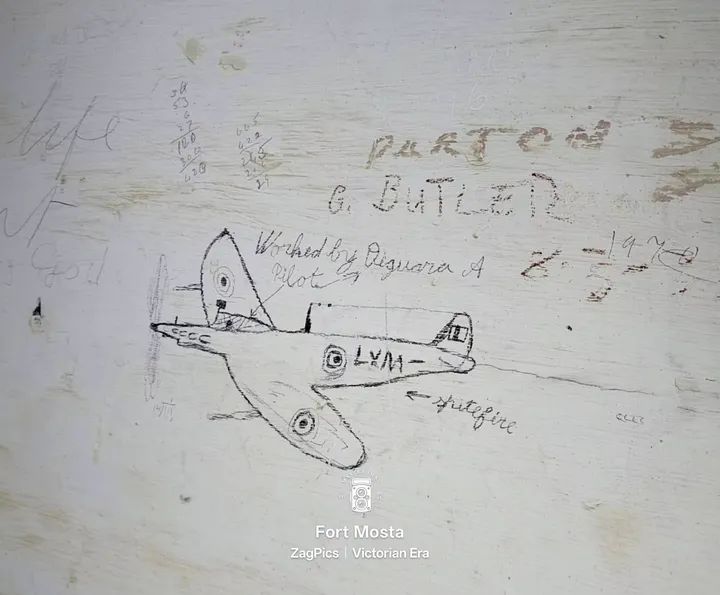
Minn din il-Facebook post tal-16 ta' Marzu 2026 ta' Omar Buhagiar:
A rare look inside Fort Mosta.
Currently in use by the AFM, this Victorian landmark is a critical part of our history that remains hidden from public view. Seeing it firsthand reminds me that these sites are not just relics—they are irreplaceable monuments that desperately need a balanced strategy for restoration and preservation.
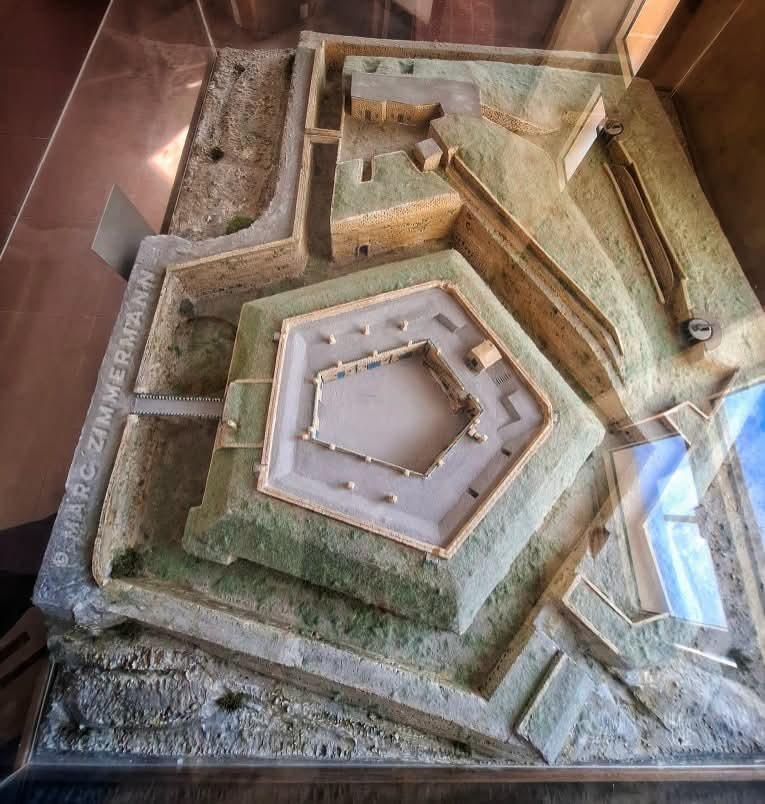 Mudell tal-Fortizza tal-Mosta
Minn din il-Facebook post ta' Mark Zimmermann:
Mibnija fl-1878, dan il-mudell inhadem minn Giovanni Muscat ghall-esebizzjoni fin-National Army Museum ta' Londra li ttellghet fl-1997 fuq l-istorja tal-Victoria Lines. Il-mudell, wiesgha cirka 75cm, illum jinsab ghall-wiri fic-Centru Civiku tal-Mosta (qabel tidhol il-Librerija).